Full Model-to-Silicon Platform, Not Just a Chip
Software & Machine Learning to Realize Analog Compute for Physical AI
From trained model to validated silicon in six steps
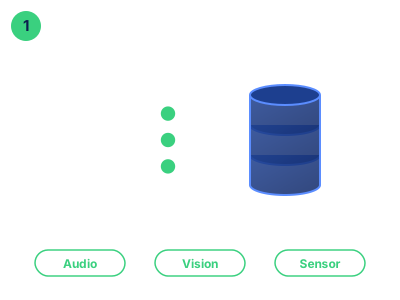
1. Models & Datasets
Workload ingest
Start with ready-to-deploy multimodal models (model zoo) and curated datasets for audio, vision and sensor workloads. Use a Blumind reference model as your baseline, or bring your own model and data. Tune the model to your product and your use case.
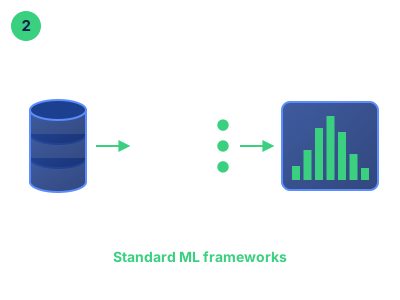
2. Training Flow
Standard ML frameworks
Train in the ML frameworks that your team already uses. The Blumind training flow adds noise-aware, quantized training. The model learns the behavior of analog compute during training, so it keeps its inference accuracy when it runs on silicon.
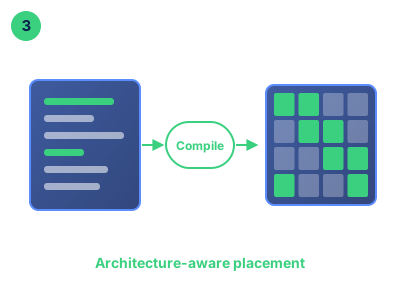
3. AI-Driven Compiler & Mapper
Architecture-aware
Import your PyTorch or ONNX model. The compiler optimizes the model graph and translates it to the AMPL™ architecture. The mapper then places each layer on the analog compute array to get the best use of the silicon.
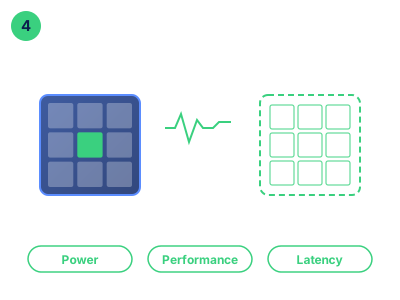
4. Digital Twin
Simulation
A behavioral model of the silicon simulates power, performance and latency before you build hardware. Use the digital twin to compare model options, confirm your power budget and find problems early in your design cycle.
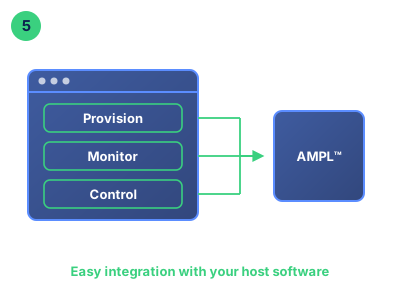
5. Software Development Kit
Easy integration
A comprehensive software library lets your host processor provision, monitor and control the silicon. Load models, start inference and read results from your own application code.
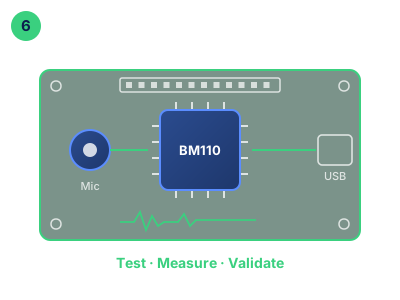
6. Hardware Evaluation Kit
De-risk & accelerate
The evaluation kit is a reference design, use it to test, measure and validate your model on real silicon before you commit to your own board design. (Learn more about BM110).